
Some time back, I wrote a post. Recently, I asked good – really good blog writers – to chime in. Gauntlet throwing being as dramatic as you can get, my annoying trick was taken up by wearingtwogowns.com whose writing is very deep and makes me feel like Jerry Lewis at the Mariinsky. He chose the post about TMRJ’s treatment of Cecilia Kerche and won my eternal respecxt when the post had basketball references. Good Gawd does it get any better? I intend to make my last words “Larry Bird is the GOAT”.
Now read this:
RESPONSE to “When Not To Throw Ballet Shade”
I’ve learned in my years observing this world: sometimes the absence speaks a different language than we want to hear. And sometimes the people who stand alone aren’t martyrs—they’re just people who refused to bend.
When someone makes a “very big” decision—one that divides people—I’ve learned to ask: whose story are we really telling? Because I know what it means to face barriers. Real barriers. Not artistic differences or philosophical disagreements, but the kind that should have ended everything before it began.
I was picked for the New York Ballet School on Broadway. An inner-city school kid. Chosen. My sister was jealous—she hadn’t been selected for anything like that. But my grandma and parents didn’t support me. They thought ballet was effeminate, something that would make me less than what I should be. My teacher at school didn’t save work for me when I had to miss class for rehearsals. Socioeconomic reality meant choosing between survival and the studio almost daily.
You want to know what I learned from all that? I learned to adapt. I learned to compromise. I learned to work within imperfect systems because burning them down wasn’t going to feed my family or change my grandmother’s mind or make my teacher suddenly care about my dreams.
I learned that principle without pragmatism is just performance art.
On that basketball court, managing my lanky body through space, I learned something ballet was teaching me in a different language: you work with what you have, where you are, with the people around you. The coordination ballet gave me—the footwork, the balance, the core engagement—it wasn’t just about my body. It was about reading the court, knowing when to pass, understanding that your teammates need you to show up, not blow up.
When someone decides their principles trump the collective effort, everyone feels it. And I learned this the hard way: when you’re the one from the wrong side of town, when you’re the one whose family doesn’t understand, when you’re the one whose teacher won’t help—you don’t have the luxury of burning bridges and calling it courage.
Because here’s the truth nobody wants to say out loud: sometimes the people who claim to be making sacrifices are really just making scenes. Sometimes what looks like standing on principle is actually standing on everyone else. And sometimes the community that steps back isn’t betraying you—they’re protecting themselves from your explosion.
I think about Rosario Ferré’s Flight of the Swan. That Russian ballerina in Puerto Rico, so committed to her heritage that she couldn’t see she was destroying everyone around her. The company members who lost work. The students who lost their teacher. The art itself, suffocating under the weight of her inflexibility.
What haunted me about that novel wasn’t just her tragedy—it was her choice. She could have adapted. She could have found a way to honor her Russian roots while building something new in Puerto Rico. Instead, she insisted on purity, on absolute fidelity to a world that no longer existed. And she ended up with nothing. Neither Russian nor Puerto Rican. Just alone.
When I couldn’t make it to ballet because I had to work, when my grandmother told me I was becoming something shameful, when my teacher refused to save my assignments—I had a choice. I could have said: “This is unfair. This system is broken. I’m going to stand on my principles and demand they change everything for me.”
But I didn’t. Because I understood something that maybe Cecilia didn’t: the world doesn’t owe you a stage just because you deserve one. And burning down the theater doesn’t make you an artist—it makes you an arsonist.
I adapted. I compromised. I found ways to work within systems that weren’t built for me. Was it fair? No. Was it right? No. But did it keep me in the game long enough to learn something? Yes.
The dance world is ruthless—hundreds of talented people competing for dozens of spots, artistic directors making impossible choices. At the New York Ballet School on Broadway, I watched dancers who had everything I didn’t: supportive families, saved homework, financial security. And I watched some of them throw it all away on “principle,” convinced their artistic vision was more important than the production itself.
Every dancer in that studio depended on the others. When someone decided their principles mattered more than showing up, more than adapting, more than working within the choreography even when they disagreed with it—we all paid the price.
It was exactly like basketball. The player who goes rogue, who freelances when the play calls for a pass, who fouls out “on principle” because they disagree with the ref—that player doesn’t just hurt themselves. The team still has to finish the game. And my lanky body learned this: you can’t win alone, no matter how high you jump. No matter how right you think you are.
I’ve seen people cast themselves as martyrs when they were actually breaking contracts. When they were violating trust. When they were putting their ego ahead of everyone else’s livelihood. And I’ve seen communities step back—not because they lack character, but because they finally understood: this person will never stop burning bridges and calling it light.
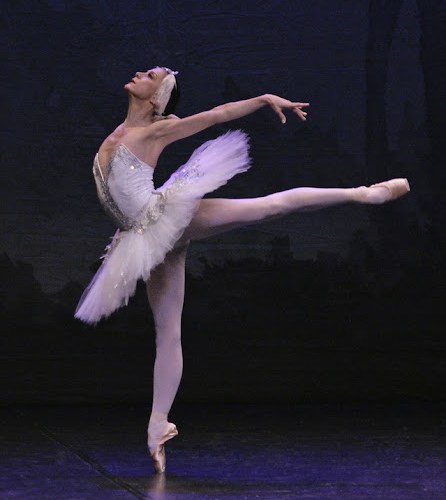
Marianela Núñez, Royal Ballet
In Flight of the Swan, Ferré shows us what happens when someone refuses to adapt. The ballerina doesn’t grow. She doesn’t transform. She just hardens, becomes more rigid, more isolated, more convinced that everyone else is wrong. Until finally, she’s alone. And she calls it purity.
That’s not sacrifice. That’s suicide by principle.
Those hours at the barre taught me the difference between healthy pain and injury. The best teachers knew: push through discomfort, yes, but recognize when you’re actually damaging yourself and your ability to serve the art. The worst teachers praised dancers who destroyed themselves and called it dedication.
But you know what else the worst teachers did? They enabled dancers who destroyed others and called it integrity.
When I couldn’t get family support, when my teacher wouldn’t help, when socioeconomic reality meant I had to make impossible choices—I learned my limits. I learned to work with my lanky frame, not against the physics of my own body. I learned when to drive the lane and when to pull back.
But most importantly, I learned this: adaptation isn’t betrayal. Compromise isn’t cowardice. And working within an imperfect system isn’t selling out—it’s surviving long enough to actually change something.
That lamp in the window? Sometimes it’s not lit because nobody cares. But sometimes it stays dark because you burned the house down and called it liberation. The people who quietly slip away aren’t always abandoning you—sometimes they’re just tired of getting burned.
Here’s the uncomfortable truth nobody wants to hear: institutions have responsibilities, yes. But so do individuals. When someone divides a community, when their actions create consequences for dozens of others, when they refuse every compromise and call it courage—choosing not to celebrate that isn’t throwing shade. It’s having boundaries.
I don’t know what Cecilia Kerche did. But I know this: in every story where someone stands alone, convinced of their righteousness while their community walks away, we need to ask not just “were they brave?” but “were they right?” And we need to ask: “Did they ever try to work with anyone, or were they always going to blow it all up?”
The hardest lesson I learned from that New York Ballet School on Broadway, from my grandmother’s rejection, from my teacher’s indifference, from every socioeconomic barrier that should have stopped me—the lesson wasn’t about standing firm. It was about learning to bend.
Not every hill is worth dying on. Not every conviction deserves to cost other people their careers. And the people who stay quiet aren’t always villains—sometimes they’re just the ones who’ve been burned before by someone else’s “principled stand.”
We talk about stepping on people on the way up. But what about those who blow up the stage on their way out? Who claim they’re making a sacrifice when really they’re just refusing to do the hard work of compromise? Who leave rubble for everyone else to navigate and call it courage?
I remember facing barriers that would have given me every justification to burn it all down. My family didn’t support me. My school didn’t help me. The system wasn’t built for an inner-city kid with a lanky body and a grandmother who thought ballet was shameful.
But I learned something from that struggle: principle without wisdom is just destruction with better PR.
Character isn’t just about courage. It’s about discernment. About understanding that your truth isn’t the only truth. About recognizing when your sacrifice actually sacrifices everyone around you. About knowing the difference between standing firm and just being stubborn.
In basketball, the player who fouls out “on principle”—who disagrees with the ref’s call so much they can’t finish the game—that player doesn’t become a hero. They become a liability. Because the team still needs them. The game doesn’t stop just because you’re convinced you’re right.
In Flight of the Swan, the ballerina who refuses to adapt doesn’t preserve Russian ballet—she destroys the chance for it to grow in new soil. She doesn’t honor her heritage—she mummifies it. And everyone around her pays the price for her purity.
Maybe that’s the real ballet shade worth throwing: at those of us who confuse inflexibility with integrity. At the version of ourselves that thinks every artistic disagreement is worth destroying a community over. At the narrative that says adaptation is always betrayal and compromise is always cowardice.
My teachers at the New York Ballet School—the good ones—would say: respect the choreography before you change it. Master the tradition before you rebel against it. They understood that innovation without foundation is just chaos in a tutu.
But they understood something else too: that foundation requires flexibility. That you can’t master anything if you’re too rigid to learn from the world as it actually is, not as you wish it were. That you can’t respect choreography if you refuse to dance with anyone who doesn’t see things exactly your way.
Or in basketball: freelancing without fundamentals is just a turnover waiting to happen. But fundamentals without teamwork is just talent dying alone on the court.
Jesus said “you feed them”—but he was talking to people who were willing to work together. Who understood that feeding the multitude requires more than one person’s conviction. It requires the whole community bringing what they have and sharing it.
The sin of omission isn’t just failing to help someone. It’s also failing to recognize when your principles are destroying the very people you claim to serve.
I faced every barrier that should have made me bitter, rigid, unbending. But I learned this: survival requires adaptation. Excellence requires compromise. And true sacrifice isn’t about standing alone—it’s about staying in the community long enough to lift others up when you finally get the chance.
Maybe those absences on Cecilia’s Facebook aren’t betrayals. Maybe they’re boundaries. Maybe they’re exhaustion. Maybe they’re the quiet wisdom of people who’ve learned that not every explosion is a revolution, and not every person who stands alone deserves applause.
Sometimes they just deserve to be alone with their principles.
wearingtwogowns.com


 le sacre du printemps: the collections