Wearingtwogowns Takes the Gauntlet. And kills it.

Ballet Shade

Some time back, I wrote a post. Recently, I asked good – really good blog writers – to chime in. Gauntlet throwing being as dramatic as you can get, my annoying trick was taken up by wearingtwogowns.com whose writing is very deep and makes me feel like Jerry Lewis at the Mariinsky. He chose the post about TMRJ’s treatment of Cecilia Kerche and won my eternal respecxt when the post had basketball references. Good Gawd does it get any better? I intend to make my last words “Larry Bird is the GOAT”.

Now read this:

RESPONSE to “When Not To Throw Ballet Shade”

I’ve learned in my years observing this world: sometimes the absence speaks a different language than we want to hear. And sometimes the people who stand alone aren’t martyrs—they’re just people who refused to bend.

When someone makes a “very big” decision—one that divides people—I’ve learned to ask: whose story are we really telling? Because I know what it means to face barriers. Real barriers. Not artistic differences or philosophical disagreements, but the kind that should have ended everything before it began.

I was picked for the New York Ballet School on Broadway. An inner-city school kid. Chosen. My sister was jealous—she hadn’t been selected for anything like that. But my grandma and parents didn’t support me. They thought ballet was effeminate, something that would make me less than what I should be. My teacher at school didn’t save work for me when I had to miss class for rehearsals. Socioeconomic reality meant choosing between survival and the studio almost daily.

You want to know what I learned from all that? I learned to adapt. I learned to compromise. I learned to work within imperfect systems because burning them down wasn’t going to feed my family or change my grandmother’s mind or make my teacher suddenly care about my dreams.

I learned that principle without pragmatism is just performance art.

On that basketball court, managing my lanky body through space, I learned something ballet was teaching me in a different language: you work with what you have, where you are, with the people around you. The coordination ballet gave me—the footwork, the balance, the core engagement—it wasn’t just about my body. It was about reading the court, knowing when to pass, understanding that your teammates need you to show up, not blow up.

When someone decides their principles trump the collective effort, everyone feels it. And I learned this the hard way: when you’re the one from the wrong side of town, when you’re the one whose family doesn’t understand, when you’re the one whose teacher won’t help—you don’t have the luxury of burning bridges and calling it courage.

Because here’s the truth nobody wants to say out loud: sometimes the people who claim to be making sacrifices are really just making scenes. Sometimes what looks like standing on principle is actually standing on everyone else. And sometimes the community that steps back isn’t betraying you—they’re protecting themselves from your explosion.

I think about Rosario Ferré’s Flight of the Swan. That Russian ballerina in Puerto Rico, so committed to her heritage that she couldn’t see she was destroying everyone around her. The company members who lost work. The students who lost their teacher. The art itself, suffocating under the weight of her inflexibility.

What haunted me about that novel wasn’t just her tragedy—it was her choice. She could have adapted. She could have found a way to honor her Russian roots while building something new in Puerto Rico. Instead, she insisted on purity, on absolute fidelity to a world that no longer existed. And she ended up with nothing. Neither Russian nor Puerto Rican. Just alone.

When I couldn’t make it to ballet because I had to work, when my grandmother told me I was becoming something shameful, when my teacher refused to save my assignments—I had a choice. I could have said: “This is unfair. This system is broken. I’m going to stand on my principles and demand they change everything for me.”

But I didn’t. Because I understood something that maybe Cecilia didn’t: the world doesn’t owe you a stage just because you deserve one. And burning down the theater doesn’t make you an artist—it makes you an arsonist.

I adapted. I compromised. I found ways to work within systems that weren’t built for me. Was it fair? No. Was it right? No. But did it keep me in the game long enough to learn something? Yes.

The dance world is ruthless—hundreds of talented people competing for dozens of spots, artistic directors making impossible choices. At the New York Ballet School on Broadway, I watched dancers who had everything I didn’t: supportive families, saved homework, financial security. And I watched some of them throw it all away on “principle,” convinced their artistic vision was more important than the production itself.

Every dancer in that studio depended on the others. When someone decided their principles mattered more than showing up, more than adapting, more than working within the choreography even when they disagreed with it—we all paid the price.

It was exactly like basketball. The player who goes rogue, who freelances when the play calls for a pass, who fouls out “on principle” because they disagree with the ref—that player doesn’t just hurt themselves. The team still has to finish the game. And my lanky body learned this: you can’t win alone, no matter how high you jump. No matter how right you think you are.

I’ve seen people cast themselves as martyrs when they were actually breaking contracts. When they were violating trust. When they were putting their ego ahead of everyone else’s livelihood. And I’ve seen communities step back—not because they lack character, but because they finally understood: this person will never stop burning bridges and calling it light.

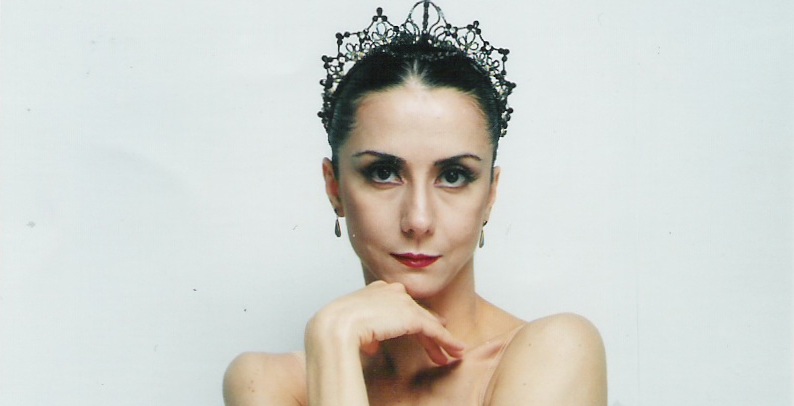
Marianela Núñez, Royal Ballet

In Flight of the Swan, Ferré shows us what happens when someone refuses to adapt. The ballerina doesn’t grow. She doesn’t transform. She just hardens, becomes more rigid, more isolated, more convinced that everyone else is wrong. Until finally, she’s alone. And she calls it purity.

That’s not sacrifice. That’s suicide by principle.

Those hours at the barre taught me the difference between healthy pain and injury. The best teachers knew: push through discomfort, yes, but recognize when you’re actually damaging yourself and your ability to serve the art. The worst teachers praised dancers who destroyed themselves and called it dedication.

But you know what else the worst teachers did? They enabled dancers who destroyed others and called it integrity.

When I couldn’t get family support, when my teacher wouldn’t help, when socioeconomic reality meant I had to make impossible choices—I learned my limits. I learned to work with my lanky frame, not against the physics of my own body. I learned when to drive the lane and when to pull back.

But most importantly, I learned this: adaptation isn’t betrayal. Compromise isn’t cowardice. And working within an imperfect system isn’t selling out—it’s surviving long enough to actually change something.

That lamp in the window? Sometimes it’s not lit because nobody cares. But sometimes it stays dark because you burned the house down and called it liberation. The people who quietly slip away aren’t always abandoning you—sometimes they’re just tired of getting burned.

Here’s the uncomfortable truth nobody wants to hear: institutions have responsibilities, yes. But so do individuals. When someone divides a community, when their actions create consequences for dozens of others, when they refuse every compromise and call it courage—choosing not to celebrate that isn’t throwing shade. It’s having boundaries.

I don’t know what Cecilia Kerche did. But I know this: in every story where someone stands alone, convinced of their righteousness while their community walks away, we need to ask not just “were they brave?” but “were they right?” And we need to ask: “Did they ever try to work with anyone, or were they always going to blow it all up?”

The hardest lesson I learned from that New York Ballet School on Broadway, from my grandmother’s rejection, from my teacher’s indifference, from every socioeconomic barrier that should have stopped me—the lesson wasn’t about standing firm. It was about learning to bend.

Not every hill is worth dying on. Not every conviction deserves to cost other people their careers. And the people who stay quiet aren’t always villains—sometimes they’re just the ones who’ve been burned before by someone else’s “principled stand.”

We talk about stepping on people on the way up. But what about those who blow up the stage on their way out? Who claim they’re making a sacrifice when really they’re just refusing to do the hard work of compromise? Who leave rubble for everyone else to navigate and call it courage?

I remember facing barriers that would have given me every justification to burn it all down. My family didn’t support me. My school didn’t help me. The system wasn’t built for an inner-city kid with a lanky body and a grandmother who thought ballet was shameful.

But I learned something from that struggle: principle without wisdom is just destruction with better PR.

Character isn’t just about courage. It’s about discernment. About understanding that your truth isn’t the only truth. About recognizing when your sacrifice actually sacrifices everyone around you. About knowing the difference between standing firm and just being stubborn.

In basketball, the player who fouls out “on principle”—who disagrees with the ref’s call so much they can’t finish the game—that player doesn’t become a hero. They become a liability. Because the team still needs them. The game doesn’t stop just because you’re convinced you’re right.

In Flight of the Swan, the ballerina who refuses to adapt doesn’t preserve Russian ballet—she destroys the chance for it to grow in new soil. She doesn’t honor her heritage—she mummifies it. And everyone around her pays the price for her purity.

Maybe that’s the real ballet shade worth throwing: at those of us who confuse inflexibility with integrity. At the version of ourselves that thinks every artistic disagreement is worth destroying a community over. At the narrative that says adaptation is always betrayal and compromise is always cowardice.

My teachers at the New York Ballet School—the good ones—would say: respect the choreography before you change it. Master the tradition before you rebel against it. They understood that innovation without foundation is just chaos in a tutu.

But they understood something else too: that foundation requires flexibility. That you can’t master anything if you’re too rigid to learn from the world as it actually is, not as you wish it were. That you can’t respect choreography if you refuse to dance with anyone who doesn’t see things exactly your way.

Or in basketball: freelancing without fundamentals is just a turnover waiting to happen. But fundamentals without teamwork is just talent dying alone on the court.

Jesus said “you feed them”—but he was talking to people who were willing to work together. Who understood that feeding the multitude requires more than one person’s conviction. It requires the whole community bringing what they have and sharing it.

The sin of omission isn’t just failing to help someone. It’s also failing to recognize when your principles are destroying the very people you claim to serve.

I faced every barrier that should have made me bitter, rigid, unbending. But I learned this: survival requires adaptation. Excellence requires compromise. And true sacrifice isn’t about standing alone—it’s about staying in the community long enough to lift others up when you finally get the chance.

Maybe those absences on Cecilia’s Facebook aren’t betrayals. Maybe they’re boundaries. Maybe they’re exhaustion. Maybe they’re the quiet wisdom of people who’ve learned that not every explosion is a revolution, and not every person who stands alone deserves applause.

Sometimes they just deserve to be alone with their principles.

wearingtwogowns.com

From Nijinsky to Chaos: A Journey Through Controversial Ballets

le sacre du printemps

HERE COMES BALLET SHADE #5.

THIS is not going to be a post about Nijinsky’s recovered choreography of 1913. It’s going to be about the barf on the stage floor that only appears when an atrocity – an afront even – to that brilliance of Vaslav Nijinsky is left behind in a delusional horrible dance. Big shout out to some stupid dance companies.

bausch

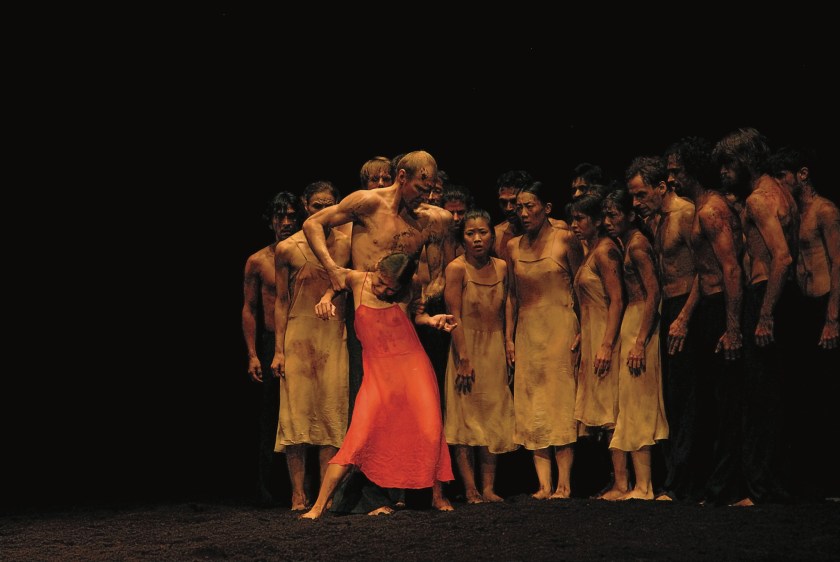
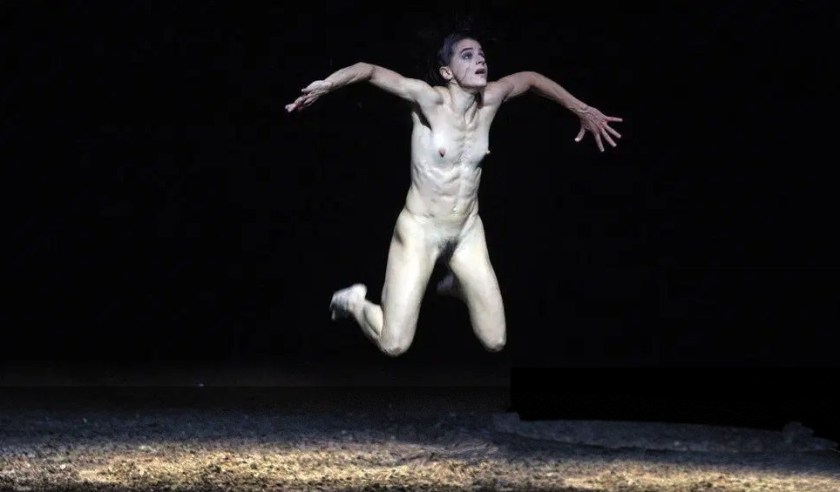
I’ve never been able to understand how Pina Bausch could take such a pedestrian approach to the Rite of Spring after she had seen the original choreography? She is a genius or was and I can’t believe it is her behind stripping a girl down and having her dance with her tit out? First year dance student at a junior college could have done better than this but let’s move forward to something I never ever thought I would see and I think Pierre Boulez probably wishes he never did.

bartabas

“Le Saddle du printemps” ok that’s not what it was called but can you believe that there was a horse scene? I mean there are horses in this ballet! Ths dude Bartabas who created it was once the third of Barnum Baily and Bartabas but the former 2 kicked him out for being too serious. So he stole their horses, hoodwinked Boulez and well well,., here we are with a well kept secret horse ballet.

preljocaj

OF COURSE! The Rite of Spring means nothing without a gang rape said a chain smoking french pig choreographer. Angelin Prelocaj concluded – stupidly – that it is not a gang rape if the Rite of Spring is in the background. This dude should have been arrested but it seems gang rape is legal provided Stravinsky is playing in the background. I wonder what crimes you could get away with to Edgard Varese? Fuck your disgusting ballet.

waltz

weiss

When I saw Isadora Weiss choreography I spent way too much time trying to figure out where her cake was. I mean is the woman a slave is she a complete masochist or is she a dominant sadist it’s impossible to tell so I wrote to her and asked. It was in 2023 so there’s still time I suppose for her to get back to me fingers crossed bitch .

Of course I left a message a day on the voice mail of the Governor of Alabama who doesn’t understand Christianity and they finally answered the phone and said stop calling. I replied “Yeah I have already moved on to a better headcase.”

Marie Chouinard is fucked in the head. My biggest fear is that she will team up with Jan Fabre. I have nothing more to say.

macmillan

Yours because no one else wants me,

Fatova

Yours for

How I Became a Digital Archivist of Le Sacre du Printemps

le sacre du printemps

Or how to turn your toes in and your back on Swan Lake

It was a long time ago when I began a Blogger Called This Is Not Swan Lake (igorandmore was the link as I was quite devoted to Stravinsky and just tuning in to The Recovery of Le Sacre du Printemps). BTW…I will never call it a reconstruction.

RECONSTRUCTION: a thing that has been rebuilt after being damaged or destroyed. plural noun: reconstructions.

RECOVERED: find or regain possession of something stolen or lost.

Le Sacre du Printemps was both stolen and lost and by definition later recovered by Robert Joffrey, Millicent Hodson and Kenneth Archer. So suck it.

I’ve played that ecovered tune from the rooftops – and the gutters – on an old violin that turned out to be worth a fortune. I had no idea that I would become the “digital archivist” of Sacre. This is a humbling term given to me by Millicent Hodson. But really…what the hell? Why was nobody documenting this ballet? I became obsessive and at the same time I had insomnia and for some reason I was prescribed a pill that kept you awake.

You can’t get that anymore. It was a big pharmaceutical fuck up. Of course it wasn’t the “stay awake awesome have fun type of thing” it was more the “stay awake what’s wrong with me why can’t I sleep oh my God what am I going to do what am I going to do I’ll keep myself busy by looking up Stravinsky stuff.”

 That was actually on the label.

And so it was there in those rolling time zones that I bumped into people and situations that would change my life in ways I could never imagine.  From the ballet’s champion Millicent Hodson to 2 rude English ballerinas to the remarkable Marie Stravinsky to the Chosen One warriors like  Ana Lacerda  Alba Tapia Priscilla Albuquerque and Gaia Straccamore and then to dancers like my friend  in FInland Kirsi Tiilharjua to Anna Simondi of Zurich  and the entire archive catalyst Heather Aagard who, all 3 together,  were criminally not photographed in the most difficult solo in dance…from all of that and thanks to them I  became the finest version of myself. I had something to be truly and quietly proud of.

I don’t believe they know this.  They changed my life.  And from there, I would do the same. 

My old blog tagline was “selling ballet one f-bomb at a time”  and somehow I ended up becoming syndicated in a rotation of ballet sites back in 2008.  I was in the top 10 which proves you can indeed sell ballet with f-bombs.  

My Youtube channel contained the only video of the 1987 Joffrey debut of Nijinsky’s recovered ballet and the place music theory students had to go in a Stravinsky course.  It was amazing to watch commenters learn something from me then teach the same thing 3 comments later to another. See?

I am a genius.

Yours until someone else wants me

Fatova

An Insight into Millicent Hodson’s Illustrious Ballet Career

le sacre du printemps

She is a powerhouse. That’s the word.

Millicent Hodson’s name will be forever attached to and revered for the reconstruction of Le Sacre du Printemps though I am loathe to call it a reconstruction: restored. That’s the word for it but God help anyone who tries to use that word legitimately. Except for me, I use it and I am sort of legitimate, right?

I sometimes forget how graceful she is for example: she mentions only the dancers or companies that produced anything worth seeing – that’s how I see it. Many years ago I asked about the Birmingham Royal Ballet and she brought up working on Riot at the Rite and Zenaida Yanowsky who played the Chosen One in the film (and with the BRB). I heard it as grace. They probably were… awful. I have no proof and no dancers have ever responded to me.

It is possible I am blackballed though I can’t be certain.

I found this old poor quality clip from her rehearsal with the Mariinsky (what?!). I was stunned that it was not perfectly shot but in 2008 Russia, you maybe had to ration film although, again I can’t be certain. I tend forget Millicent is a dancer and my God this clip outdoes even Margarita Simonova with motion of spotting in this wild turn (it’s probably termed another way but, again I can’t be certain).

Millicent Hodson has had one illustrious and industrious career. It’s takes all I have just to turn the laptop on and write meanwhile she is writing books on planes between time zones to work with ballet companies and speak at lectures and that is where I first met this tiny powerhouse.

I had moved that morning and had a tooth extraction the evening before so I think the photos were horrid. Though, yeah I can’t be certain.

Anything historical you wish to know about this ballet is found here in a spectacular interview with Millicent and Kenneth Archer. They met in London while researching the ballet and counting thousands of circles and squares to be accurate with costumes, fell in love and got married. And that was in the 80’s when the world was getting divorced. They are still married and clearly still in love. You can see it when you meet them.

Wrapping this post up makes me realize how jealous of Millicent Hodson I am. She is one of my 4 heroes. Without her, I would not have begin this archive or written this post which feels like a good one though I can’t be certain.

Yours for certain,

Fatova

Challenging Dance Norms: From Nijinsky to Jookin

choreography

(orig: May 2009)

I’ve wanted to post this for a year. I can’t tell you why I haven’t except that maybe I’m not sure of the kid’s name and I didn’t want to seem like a dork calling him “Daniel the Mad Scientist”. But I think by now, it’s pretty clear that I’m going to be considered a dork (at the very least) in some crowds and furthermore, I don’t give a flying shit. Whoever this is, he can dance. It’s spellbinding. This a like “contra-moving”, going against everything the body wants to do naturally and then making it a natural movement. This reminds me of (of course) Vaslav Nijinsky.

In 1913 – as we know by now – Nijinsky created the first “antiballet” by by choreographing in opposition to refinement: angles, turned in feet…he was  staying true to the scenario of a Sun God dick a tribe’s survival and a suicide virgin.  She is picked by teenagers!

He abandoned traditional ballet to meet the time period. And it worked! Seventy years later. In 1913 it did him in. 

There are companies like “theatre du corps” making use of dancers like the kid in the above clip as well as martial artists and street dancers. These young people are touring the world now, making a living, learning other forms of dance and getting a chance to “become” with this unusual gift of artistry they possess which in most cases ends up going nowhere but the clubs.  Check out Julien Deroualt though.  These clips pf Daniel and other dancers – they could dance like this.  I’ve watched kids jookin in videos who could bring something more here.  

But I don’t know of any company from the Portugal, Russia., Finland etc who hangs around in garages performing for each other the way these kids were doing 15 years back with Jookin. Their commitment to their style and growth of it is so much deeper than anything I have seen or heard about from ballerinas and choreographers no matter who.  They have become trapped.  There is joy in their art but there is more in this:

So, “Daniel the Mad Scientist” if that’s who you are and if it is not please write me and let me know, and all of you who are dancing like this:   you’re gifted.  You’re creating motion against itself and you seem to be doing it organically, you know?

Aim high,  Send video and portfolios to the biggest creative companies.  Stay away from Jan Fabre and Marie Chouinard. Google it.

EDIT from 2024 Ruben Noel aka Rubix

This kid makes you wait.  He doesn’t deliver when YOU want but when he wants and shit he should have or could be a jazz player who never makes any money.  He is authentic and maybe the best dancer I have seen lately.  He’s breaking into some performance work like I haven’t seen in hip hop before. You can find better quality stuff of his with Kuty and Criminalz but I will conclude with this:

From Nikinsky to Memphis jookin to Julien Derouault of Theatre du Corps to Rubix:  they all are creating and dancing against the norm and when you do that…I believe…you wring everything out of yourself and leave it on the stage the streets, some school gym..for the next guy to learn from. That’s how it should be.

I remain, yours because no one else wants me

Fatova

The Rite of Spring Takes A Dangerous Turn (NSFW)

Rite of Spring

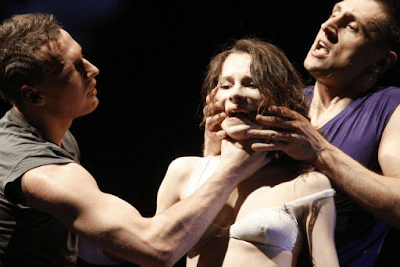
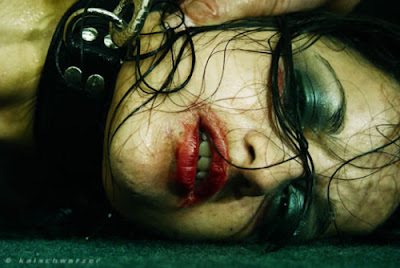
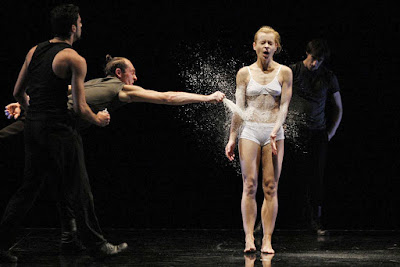
Izadora Weiss and Wojciech Misiuro , directors of the Baltic Dance Theater has done what no choreographer has been able to do with the concept and music of Le Sacre du Printemps:  turn it into a traumatic experience. This is not fringe or experimental.  It is irresponsible.  Although it is not visually the “useless whore” statement of this photo, it throws its lot in with it. 

I used to do some performance stuff that was out there, lyrics about my rape set to circus music, delivering a “baby” at the prom and stuffing it in the trash making sure no one sees…it was dark comedy.  Fringe and experimental, a little offensive but for the most part, no one really knew what was going on.  I am funny on stage and can distract from the content.  Yikes…I just realized I am a slapstick comedienne. Gross.

But what Izadora Weiss has done is use a misogynistic objectification of a woman: not Chosen but victimized and psycho-sexually controlled – to interpret the libretto of Le Sacre and really, I get it.   Any woman who has been involved with a violent malevolent sadist and who would think the abuse is really because he loves her and she is the one WOULD get it because hey look…right in this photo you can see the promise of love in his fist.

Yes.  There is an implied intimacy in this photo.

Weiss and Misiuro’s  “Rite” is not experimental. It is calculated.  This isn’t dark comedy.  It is simply dark.  It is horrible.

These photos alone are not easy to look at.  This is not a submissive orsacrificed Chosen One.  It is a controlled victim.  This performance does not use domination and submission as a dark exploration of Le Sacre nor is it  a commentary.  It is an indifference. 

It goes too far.  I can’t believe I am saying this but it is worse than Preljojac’s Rite of Spring “gang rape”. 

I write constantly that I strive to bring dance to the “ballet is frigging stupid” set.  This ballet would most assuredly attract people who would otherwise never watch ballet.  Unfortunately, those people would be sexual sadists and violent misogynists. 

There are clips available online for this performance and they too will draw men in for a yank.  The thought that strangers to Stravinsky’s masterpiece may play it while abusing their victims – even in a consensual psycho sexual relationship – sort of makes me want to puke. 

Mary Wigman: Pioneer, Nazi, Nobody

Ballet Shade

Here is Mary Wigman a pioneer in expressionist dancing performing her “Witch Dance” which she debuted in Berlin in 1914. She was very influential in “creepy movement in film”, as the narrator explains. This is all very “silent-movie creature-of-the-night” type of stuff that she is doing, isn’t it? Yet at the same time, when I first saw it, I thought “wait…..is this Norma Desmond?”  Looks like her, yeah?

You see, I never heard of Mary Wigman. Have you? I’ll tell you why you haven’t.

As “ahead of her time” as this “artist ” may have been, when Hitler took control of Germany, this free thinking, Wiemar-era visionary handed all of her Jewish dancers/employees and friends right over to the Nazis.

In slow, dramatic, creepy motions, I’m sure.


This horror may explain why today was the first time I ever heard of this “visionary”. An act of cowardice like that sort of negates all that progressiveness. All that boldness. And what’s left is a dancing Nazi who is given little credit for her contribution.  Those who promote her have missed the point, They just consider themselves avant garde. 


Here ballet’s icon Dame Margot Fonteyne drives that point a bit by failing to make any mention whatsoever of Wigman – who is obviously in advance of her time with that witch dance (1914) and should be mentioned somewhere between Nijinksky (1913) and Kurt Jooss’ “Green Table” (1932).Check it out:

A friend of mine said “she probably didn’t know what was being done to the Jews or maybe she was scared”
to which I replied 
“If you can get up on stage and do that fucking witch dance during Nazi occupation, you aren’t scared –  you’re indifferent.”
And her indifference snuffed out what should have been her legend. 
Wigman died in 1973 at the age of 86. Just enough years to watch her name become synonymous with….nothing.

Sieg Heil, Mary.

Love, Fatova